
Best Smart Grid Stocks to Buy in 2026 (Top Smart Grid Companies for Long-Term Investors)
Introduction
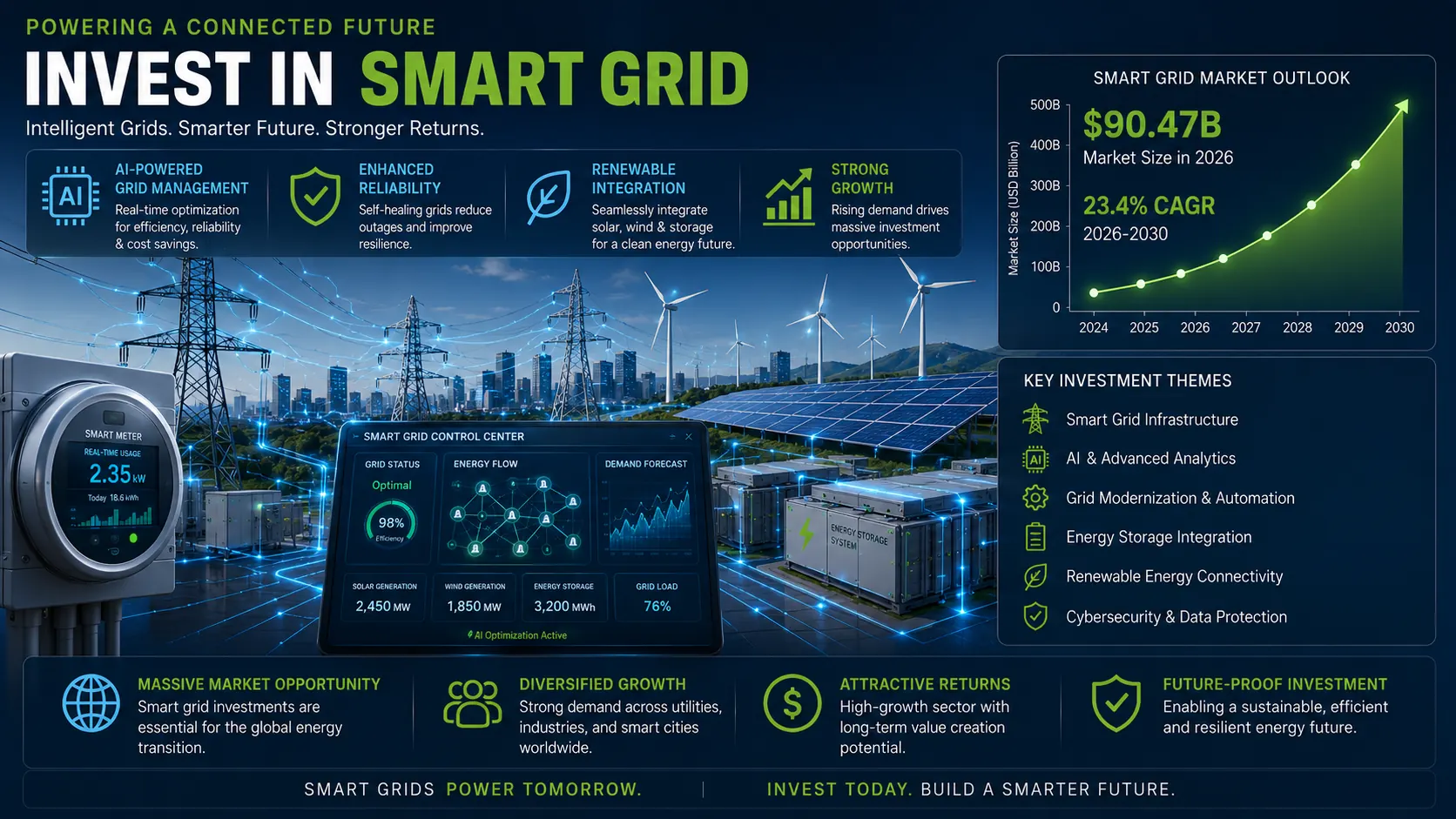
Best Smart Grid Stocks to Buy in 2026 are attracting increasing investor attention as governments and utility companies modernize aging electricity networks. Traditional power grids were designed decades ago for one-way electricity distribution, but today’s energy landscape is far more complex. The rapid growth of renewable energy, electric vehicles, battery storage, and artificial intelligence requires smarter, more flexible electrical infrastructure.
Smart grids use digital technologies, sensors, automation, and artificial intelligence to monitor electricity generation, distribution, and consumption in real time. These advanced systems improve grid reliability, reduce power outages, optimize energy usage, and integrate renewable energy more efficiently.
Artificial intelligence is also accelerating the need for smarter electricity networks. AI-powered data centers consume enormous amounts of electricity, making efficient energy management increasingly important. At the same time, millions of electric vehicles are placing additional demand on local power grids, requiring utilities to invest in intelligent infrastructure capable of balancing electricity supply and demand.
For long-term investors, smart grid companies offer exposure to several structural growth trends, including electrification, renewable energy, AI infrastructure, digital transformation, and utility modernization.
In this guide, you’ll discover the Best Smart Grid Stocks to Buy in 2026, learn how smart grids are transforming global energy systems, explore leading companies, and understand the opportunities and risks before investing.
What Are Smart Grid Stocks?
Smart grid stocks are companies that develop technologies used to modernize electricity networks. Unlike traditional power grids, smart grids use digital communication systems, automation, sensors, cloud computing, and artificial intelligence to improve the generation, transmission, and distribution of electricity.
The smart grid ecosystem includes companies specializing in:
- Smart electricity meters
- Grid automation
- Power management systems
- Energy management software
- Electrical equipment
- Transmission infrastructure
- Renewable energy integration
- Battery storage integration
- Grid cybersecurity
- Industrial automation
These technologies help utilities improve efficiency while reducing operational costs and increasing grid reliability.
Why Smart Grids Matter
Growing Electricity Demand
Global electricity consumption continues increasing as economies become more digital and industries electrify.
Electric vehicles, AI data centers, manufacturing automation, and renewable energy all require modern electrical infrastructure capable of handling significantly higher demand.
Smart grids allow utilities to manage electricity more efficiently while minimizing waste.
Renewable Energy Integration
Renewable energy sources generate electricity intermittently.
Smart grids help balance electricity production by automatically managing energy flows between solar farms, wind turbines, battery storage systems, and consumers.
This improves grid stability while reducing dependence on fossil fuel power plants.
Artificial Intelligence Infrastructure
Artificial intelligence is transforming nearly every industry, but AI requires enormous computing power.
Large data centers consume vast amounts of electricity and require uninterrupted power supplies.
Smart grid technologies optimize electricity distribution while improving reliability for critical infrastructure.
Electric Vehicle Charging
Millions of electric vehicles will connect to electricity networks over the coming years.
Without intelligent energy management, charging demand could place significant stress on existing grids.
Smart grids enable utilities to schedule charging, balance demand, and reduce electricity costs.
Grid Resilience
Extreme weather events, cyber threats, and aging infrastructure have increased the importance of grid resilience.
Smart grids improve outage detection, fault isolation, and system recovery, helping utilities restore electricity faster after disruptions.
Technologies Powering Smart Grids
Advanced Metering Infrastructure (AMI)
Smart meters provide real-time electricity usage data, allowing utilities and consumers to monitor energy consumption more accurately.
Artificial Intelligence
AI analyzes electricity demand, predicts equipment failures, and optimizes power distribution across the grid.
Internet of Things (IoT)
Connected sensors continuously monitor transformers, substations, and transmission lines to improve operational efficiency.
Cloud Computing
Cloud platforms enable utilities to process enormous amounts of operational data while improving scalability and system management.
Battery Energy Storage
Modern smart grids increasingly integrate battery storage systems that store excess renewable electricity and release it during peak demand.
Grid Automation
Automation reduces manual intervention while improving reliability and minimizing electricity outages.
Key Growth Drivers for 2026
Several long-term trends continue supporting the smart grid industry.
Renewable Energy Expansion
Governments continue investing heavily in solar, wind, and clean energy infrastructure.
Artificial Intelligence Growth
AI data centers require reliable electricity and advanced grid management technologies.
Electric Vehicle Adoption
Growing EV charging demand increases investment in intelligent electricity networks.
Government Infrastructure Spending
Many countries have announced multi-billion-dollar investments in modernizing aging electricity grids.
Smart City Development
Cities continue deploying connected infrastructure to improve energy efficiency and sustainability.
Industrial Electrification
Manufacturers increasingly rely on digital power management systems to improve productivity and reduce emissions.
Energy Security
Countries are investing in resilient electricity infrastructure to improve energy independence and reduce the impact of supply disruptions.
Digital Transformation
Utilities continue replacing legacy equipment with AI-powered digital technologies that improve efficiency and lower operating costs.
Best Smart Grid Stocks to Buy in 2026
1. Eaton Corporation (NYSE: ETN)
Eaton is one of the world’s leading power management companies and plays a critical role in the modernization of electrical infrastructure. Its portfolio includes intelligent power distribution equipment, energy storage integration, electric vehicle charging solutions, and grid automation technologies.
As utilities continue upgrading aging infrastructure, Eaton is well positioned to benefit from rising investment in smart grids and electrification.
Why Investors Like Eaton
- Global leader in power management
- Strong industrial and utility customer base
- Diversified revenue streams
- Consistent financial performance
Growth Drivers
- Smart grid modernization
- AI data center infrastructure
- Electric vehicle charging
- Renewable energy integration
2. Schneider Electric (OTC: SBGSY)
Schneider Electric is a global leader in digital energy management and industrial automation. The company provides software, electrical equipment, and smart infrastructure solutions that help utilities and businesses improve energy efficiency.
Its EcoStruxure platform combines artificial intelligence, IoT, and cloud computing to optimize electricity networks.
Why Investors Like Schneider Electric
- Global smart energy leader
- Advanced digital platform
- Strong recurring enterprise business
- Large international presence
Growth Drivers
- Smart buildings
- AI-powered energy management
- Industrial automation
- Renewable energy projects
3. Siemens AG (OTC: SIEGY)
Siemens develops smart grid technologies used by utilities around the world. The company offers grid automation systems, digital substations, smart meters, and intelligent transmission technologies.
Its broad industrial portfolio provides diversified exposure to infrastructure modernization.
Why Investors Like Siemens
- Diversified industrial leader
- Strong European infrastructure exposure
- Advanced digital grid technologies
- Long history of innovation
Growth Drivers
- Grid digitalization
- Renewable energy integration
- Smart substations
- Utility modernization
4. ABB Ltd. (NYSE: ABB)
ABB specializes in electrification, robotics, and industrial automation. The company develops advanced grid technologies that improve power transmission efficiency and enable greater renewable energy integration.
ABB also benefits from growing investments in electric vehicle charging infrastructure.
Why Investors Like ABB
- Global electrification leader
- Strong industrial automation business
- Innovative electrical equipment
- Large installed customer base
Growth Drivers
- Smart grids
- EV charging infrastructure
- Renewable energy
- Industrial electrification
5. Itron (NASDAQ: ITRI)
Itron focuses on intelligent utility infrastructure, including smart electricity meters, water management systems, and grid analytics.
Its technology enables utilities to monitor electricity consumption in real time while improving operational efficiency.
Why Investors Like Itron
- Smart metering expertise
- Utility software leadership
- Recurring service revenue
- Long-term government contracts
Growth Drivers
- Smart meter deployment
- Utility digitalization
- Grid analytics
- AI-driven energy management
6. Quanta Services (NYSE: PWR)
Quanta Services designs, builds, and maintains energy infrastructure across North America. The company plays an important role in expanding electricity transmission networks required for renewable energy and smart grid projects.
Why Investors Like Quanta Services
- Infrastructure construction leader
- Strong utility partnerships
- Stable project pipeline
- Long-term government investment exposure
Growth Drivers
- Transmission expansion
- Renewable energy infrastructure
- Grid modernization
- Electrification projects
7. Hubbell Incorporated (NYSE: HUBB)
Hubbell manufactures electrical infrastructure products used throughout modern electricity networks.
Its portfolio includes intelligent grid components, transmission equipment, connectors, and utility automation solutions.
Why Investors Like Hubbell
- Established utility supplier
- Reliable cash generation
- Strong infrastructure demand
- High-quality industrial products
Growth Drivers
- Grid upgrades
- Utility investments
- Renewable integration
- Distribution infrastructure
8. GE Vernova (NYSE: GEV)
GE Vernova is becoming one of the leading companies supporting the global energy transition.
The company develops technologies used in renewable energy, power transmission, grid software, and utility-scale infrastructure.
Why Investors Like GE Vernova
- Broad energy portfolio
- Strong infrastructure expertise
- Global customer relationships
- Significant growth opportunities
Growth Drivers
- Grid modernization
- Battery storage integration
- Renewable electricity
- Smart transmission systems
Sample Smart Grid Portfolio
| Company | Allocation |
|---|---|
| Eaton | 20% |
| Schneider Electric | 15% |
| Siemens | 15% |
| ABB | 15% |
| GE Vernova | 10% |
| Quanta Services | 10% |
| Hubbell | 10% |
| Itron | 5% |
This portfolio is provided for educational purposes only and should not be considered investment advice.
Benefits of Investing in Smart Grid Stocks
Smart grid companies benefit from several powerful long-term trends.
Modernizing Aging Infrastructure
Many electricity grids were built decades ago and require significant upgrades.
Renewable Energy Growth
Smart grids improve the integration of solar, wind, and battery storage into electricity networks.
Artificial Intelligence
AI increases electricity demand while also helping utilities optimize energy distribution.
Electric Vehicle Adoption
Millions of EVs require intelligent charging infrastructure that smart grids help manage.
Government Investment
Governments worldwide continue investing billions in energy infrastructure and grid modernization.
Digital Transformation
Utilities are adopting cloud computing, IoT sensors, and AI software to improve operational efficiency.
Risks of Investing in Smart Grid Stocks
Like any investment, smart grid companies face several risks.
Regulatory Risk
Infrastructure projects often depend on government policies and regulatory approvals.
Capital Spending Cycles
Utilities may delay projects during periods of economic uncertainty.
Technology Changes
Rapid innovation requires companies to continue investing in research and development.
Competition
Large industrial companies compete aggressively in the smart grid market.
Market Volatility
Infrastructure stocks can experience volatility despite long-term growth prospects.
Diversification can help reduce these risks.
Smart Grid Industry Outlook for 2026
Several structural trends continue supporting long-term industry growth.
Artificial Intelligence
AI data centers require reliable electricity and advanced power management.
Renewable Energy Expansion
Solar and wind installations continue increasing globally.
Smart Cities
Cities continue deploying connected infrastructure to improve efficiency and sustainability.
Electric Vehicles
Growing EV adoption drives investment in intelligent electricity networks.
Digital Utilities
Utilities continue adopting AI, cloud computing, and automation technologies to improve reliability.
Overall, the smart grid industry is expected to remain one of the fastest-growing segments of global energy infrastructure over the coming decade.
Final Thoughts
Best Smart Grid Stocks to Buy in 2026 offer investors exposure to one of the most important infrastructure transformations of the decade. As electricity demand rises due to renewable energy, artificial intelligence, electric vehicles, and digitalization, utilities are investing heavily in smarter and more resilient power networks.
Companies such as Eaton, Schneider Electric, Siemens, ABB, Itron, Quanta Services, Hubbell, and GE Vernova are helping modernize electricity grids through intelligent software, automation, electrical equipment, and advanced energy management technologies.
Although the sector faces challenges including regulation, competition, and technological change, smart grid infrastructure remains essential for the future of global energy systems. Investors looking for long-term exposure to electrification and digital infrastructure may find smart grid stocks an attractive addition to a diversified portfolio.
Frequently Asked Questions
What are the best smart grid stocks to buy in 2026?
Many investors follow Eaton, Schneider Electric, Siemens, ABB, Itron, Quanta Services, Hubbell, and GE Vernova because of their leadership in grid modernization and intelligent energy infrastructure.
Why are smart grids important?
Smart grids improve electricity reliability, integrate renewable energy, reduce outages, optimize power consumption, and support AI data centers and electric vehicles.
Are smart grid stocks good long-term investments?
Many analysts believe smart grid companies could benefit from long-term infrastructure spending, renewable energy adoption, and increasing global electricity demand.
How does AI support smart grids?
Artificial intelligence helps utilities predict electricity demand, detect equipment failures, optimize energy distribution, and improve overall grid efficiency.
What are the biggest risks of investing in smart grid stocks?
Investors should consider regulatory changes, infrastructure spending cycles, competition, technological disruption, and broader market volatility.