
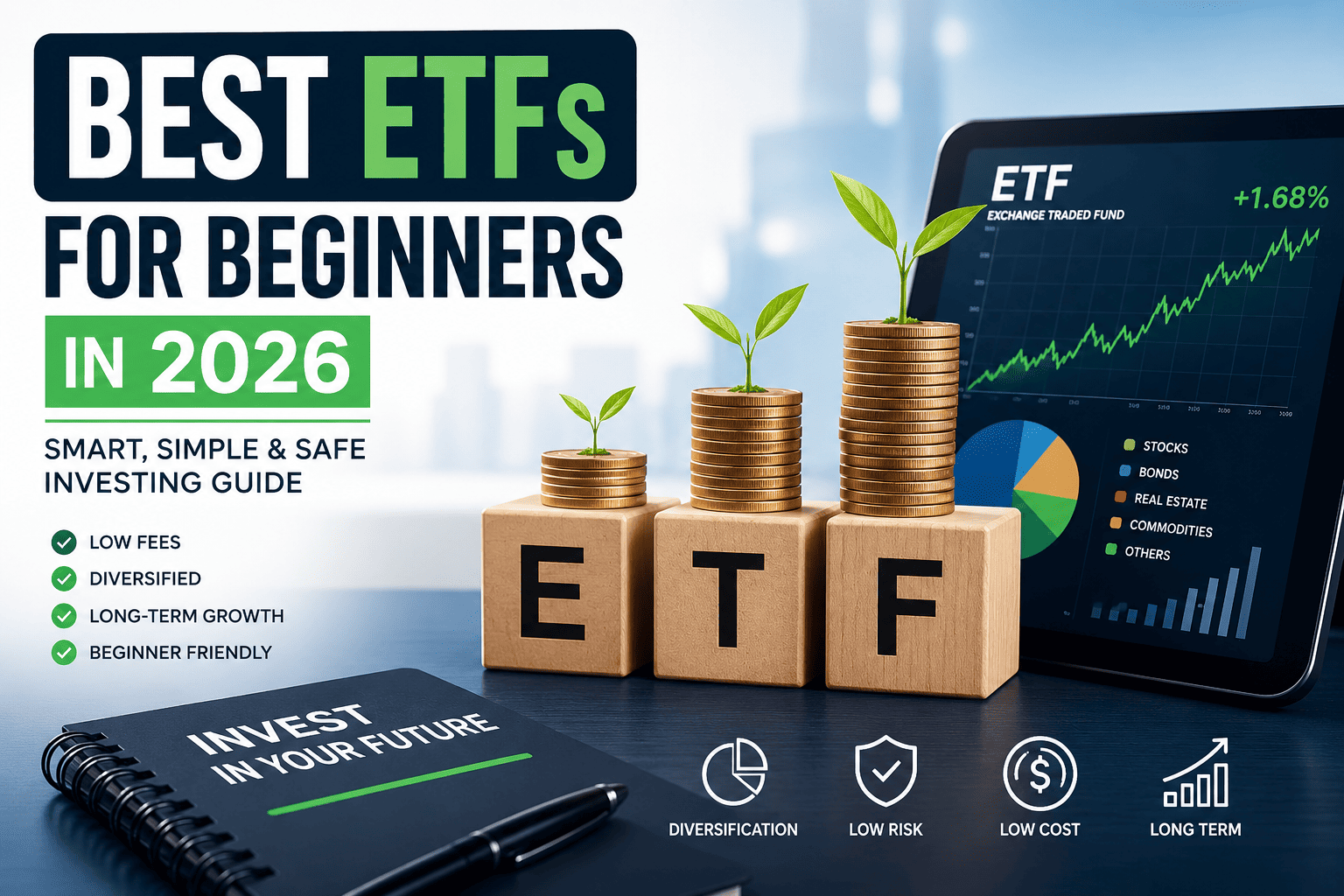
Best ETFs for Beginners in 2026 (Safe & Smart Investing Guide)
Introduction
Best ETFs for Beginners are becoming increasingly popular in 2026 as more people look for simple and low-cost ways to start investing. Exchange-Traded Funds (ETFs) allow investors to buy a collection of stocks or assets in a single investment, making diversification easier for beginners.
Many new investors prefer ETFs because they are beginner-friendly, affordable, and less risky than investing in individual stocks. Whether you want to invest for long-term growth, passive income, or retirement, ETFs can be a smart starting point.
If you are completely new to investing, you may also want to read our guide on How to Start Investing With $100 in 2026.
What Is an ETF?
An ETF (Exchange-Traded Fund) is a type of investment fund that trades on the stock market like a regular stock.
Instead of buying shares of one company, ETFs allow investors to own a diversified basket of assets such as:
- Stocks
- Bonds
- Commodities
- Crypto-related companies
- Technology companies
This diversification helps reduce risk compared to investing in a single stock.
Why ETFs Are Great for Beginners
Easy Diversification
ETFs spread your investment across many companies and sectors, helping reduce the impact of one company performing poorly.
Lower Risk
Because ETFs hold multiple assets, they are generally considered safer than investing in individual stocks.
Low Fees
Many ETFs have very low management fees, making them affordable for long-term investing.
Beginner Friendly
You do not need advanced investing knowledge to start investing in ETFs.
Best ETFs for Beginners in 2026
Vanguard S&P 500 ETF (VOO)
VOO tracks the S&P 500 index, which includes 500 of the largest companies in the United States.
Many beginners choose VOO for long-term investing because it offers broad market exposure and historically strong performance.
SPDR S&P 500 ETF Trust (SPY)
SPY is one of the most popular ETFs in the world and is widely used by both beginner and experienced investors.
It provides exposure to major U.S. companies including Apple, Microsoft, and Amazon.
Invesco QQQ Trust (QQQ)
QQQ focuses heavily on technology companies and growth stocks.
This ETF is popular among investors interested in AI, tech innovation, and long-term growth opportunities.
Vanguard Total Stock Market ETF (VTI)
VTI provides exposure to the entire U.S. stock market, including large, medium, and small companies.
It is considered one of the best all-around ETFs for beginners.
iShares Core MSCI Total International Stock ETF (IXUS)
IXUS allows investors to diversify internationally by investing in companies outside the United States.
Global diversification can help reduce overall portfolio risk.
How Much Money Do You Need to Start Investing in ETFs?
One of the biggest advantages of ETFs is accessibility.
Many investing apps now allow:
- Fractional shares
- Small deposits
- Commission-free investing
This means beginners can start investing with as little as $10 to $100.
You can also read our article on Best Investing Apps for Beginners in 2026.
ETF Investing Risks
Although ETFs are generally safer than individual stocks, they still involve risks.
Important risks include:
- Market volatility
- Economic downturns
- Sector-specific declines
- Inflation risk
Beginners should always invest according to their financial goals and risk tolerance.
Tips for Beginner ETF Investors
Invest Consistently
Long-term investing often works better when you invest regularly over time.
Avoid Emotional Decisions
Market fluctuations are normal. Panic selling can hurt long-term performance.
Focus on Long-Term Growth
Most successful ETF investors focus on years rather than short-term market movements.
Continue Learning
Financial education is important for becoming a smarter investor.
You may also enjoy our guide on AI Tools Every Investor Should Know in 2026.
Final Thoughts
Best ETFs for Beginners offer a simple and effective way to start investing in 2026. With diversification, lower fees, and beginner-friendly investing options, ETFs continue to attract millions of new investors worldwide.
Whether you are starting with $100 or building a long-term portfolio, ETFs can help you invest more confidently while reducing unnecessary risk.
As always, do your own research before investing and choose investments that match your financial goals.
FAQ
What is the safest ETF for beginners?
Many beginners consider broad market ETFs like VOO and VTI among the safer long-term ETF options because they offer strong diversification.
Can I start investing in ETFs with $100?
Yes. Many modern investing platforms allow beginners to start investing in ETFs with very small amounts of money.
Are ETFs better than stocks for beginners?
For many beginners, ETFs are often considered less risky and easier to manage than investing in individual stocks.
Internal Linking
- How to Start Investing With $100 in 2026
- Best AI Investing Tools for Beginners in 2026
- AI Tools Every Investor Should Know in 2026